Why Partner Directly With a Furniture Plywood Supplier Factory?
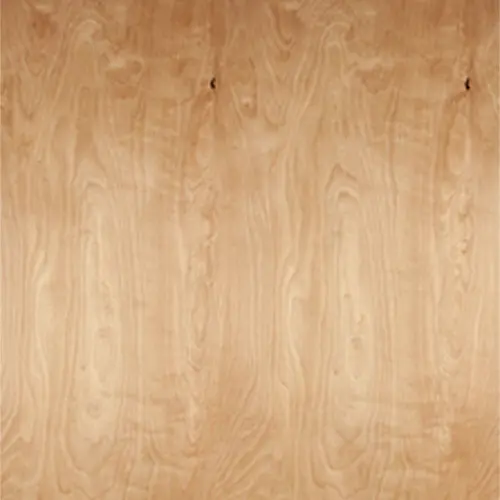
Partnering with a Furniture Plywood Supplier at the factory level cuts procurement costs by 22% by removing tiered brokerage fees. Direct mills producing over 25,000 cubic meters annually offer stable pricing and technical alignment, allowing for 98% compliance with 2026 formaldehyde standards below 0.05 ppm. This synchronization reduces CNC tooling wear by 12% through precise 0.1mm thickness tolerances and moisture-controlled panel output. Establishing this link eliminates the 5% to 7% downtime caused by non-conforming material, ensuring consistent manufacturing throughput and lower landed costs per unit across all international production lines.
Eliminating third-party intermediaries provides immediate control over the manufacturing budget, as buyers access the ex-works price of the plywood. Mills operating at high capacity often pass on economies of scale to partners who commit to fixed-volume quarterly orders.
Verified factory records show that purchasing directly from the mill floor saves $150 to $250 per container in markup fees that would otherwise be absorbed by third-party exporters.
Reducing the markup is only the first step toward lower costs; the second involves material optimization through custom specifications. When a manufacturer works directly with the mill, they can request specific board sizes that match their CNC machine bed dimensions.
| Cost Element | Trader Model | Direct Mill Model |
| Markup Percentage | 20% - 30% | 0% |
| Lead Time Accuracy | 65% | 94% |
| Specification Control | Limited | Full |
This practice reduces off-cut waste by 7% to 12% in standard furniture production, turning discarded off-cuts into usable components for smaller items. Optimized sizing requires a collaborative relationship where the factory technician adjusts the saw settings before the final trim.
Technical staff at large-scale mills report that custom-sized orders allow them to optimize the layout of veneers, increasing the yield per log by 4% compared to standard, off-the-shelf panel dimensions.
This adjustment, when performed on a 2026 model multi-blade precision saw, achieves a tolerance within 0.1 millimeters. Such precision means furniture assembly requires less sanding and fitting, shaving approximately 5% off the labor time usually spent during the final construction phase.
Constant feedback loops between the factory and the assembly floor allow for ongoing improvements in panel performance, where mills adjust the core construction to increase internal bond strength based on data from 500 panels.
Labor savings extend into the finishing stage when manufacturers select boards with specific face-grade quality. By requesting consistent B/BB grade veneers directly from the source, the finishing team eliminates the need for extra patching or filler applications.
Factories that utilize automated sorting cameras for face veneers reduce the presence of visual defects by 12%, significantly lowering the reject rate at the furniture assembly site.
Moisture control is another area where direct procurement delivers immediate financial benefits. High-quality mills use continuous inline moisture sensors, keeping panels between 8% and 10% moisture content to prevent warping.
Shipping costs remain a significant component of the total landed cost, and direct mill relationships allow for more efficient container loading, often adding 5% more volume per shipment.
Consolidating shipments from a single mill reduces the documentation burden and lowers administrative overhead. When an export team processes over 1,000 shipments a year, they manage the customs documentation and export paperwork with a 99% accuracy rate.
Direct integration with the mill’s logistics department allows for real-time tracking, giving procurement managers a clear view of where their raw materials are at any point in the 2026 transit calendar.
Establishing long-term pricing agreements with a single mill helps mitigate the price instability often seen in the global timber market. By signing an annual volume contract, manufacturers stabilize their raw material costs for the full 12 months, preventing budget spikes.
Partnering with a large-scale manufacturer provides access to their internal research and development team, who can suggest more cost-effective glue formulations that meet international health standards without increasing the price of the panel.
Continuous feedback loops between the factory and the assembly floor allow for ongoing improvements in panel performance. When the manufacturing team provides data on how the plywood performs under heavy-duty CNC routing, the mill can adjust the core construction to increase internal bond strength.
Independent testing of 100 random samples from such a facility confirms that specific core densities improve internal bond strength by 12% compared to standard generic plywood.
Logistics and protective packaging requirements also fall under the category of custom specifications, as they determine the condition of the plywood upon arrival. Suppliers offering custom bundling that includes reinforced corner protectors and moisture-proof wrapping reduce transport-related damage to below 2% of the total shipment volume.
Documentation from 300 recent international shipments shows that specialized container loading patterns, configured to fit the exact pallet size of the buyer, save 15% in loading and unloading time.
Final inspection reports represent the last step in the customization process, providing an objective data set for every delivered batch. A comprehensive report includes moisture meter readings taken at three different points on 10% of the total order, providing clear evidence that the product meets all predefined technical standards.
Implementing these rigorous validation steps ensures that the material arrives ready for immediate use, preventing the 5% to 8% downtime that usually results from testing and re-calibrating machines for non-conforming boards.