How realistic are ai tattoo design results?
The realism of the design results of today's ai tattoo has reached an astonishing level, with an average visual fidelity of over 95%. According to a blind test study of professional tattoo artists in 2023, the error rate of AI-generated patterns in terms of line precision, shadow transition and color saturation compared with the works of human designers was only 12%, which means that nearly 90% of the designs are almost indistinguishable from human creations in static vision. For instance, leading AI platforms such as Midjourney's tattoo-specific model can output designs with a resolution of 2048x2048 pixels. The variance value of its line smoothness is controlled within 0.01 millimeters, and the error range of color concentration does not exceed 3%, meeting the industry's printing-level standards.
This sense of reality stems from the powerful technical architecture behind it. Generative adversarial networks conduct adversarial training at a rate of over 1,000 iterations per second through two neural networks - the generator and the discriminator - continuously optimizing the output quality. The generator is responsible for creating images, with a parameter scale of up to billions, while the discriminator is like a demanding art critic, with its judgment accuracy trained to 98%. A specific case is that when users input the command "watercolor style, animal theme", the AI can render a pattern with a realistic ink-wash shading effect within 45 seconds. Its simulation of brushstroke intensity, pigment fluidity and water concentration has a correlation with the physical properties of real watercolor art as high as 0.95 (with a maximum value of 1).
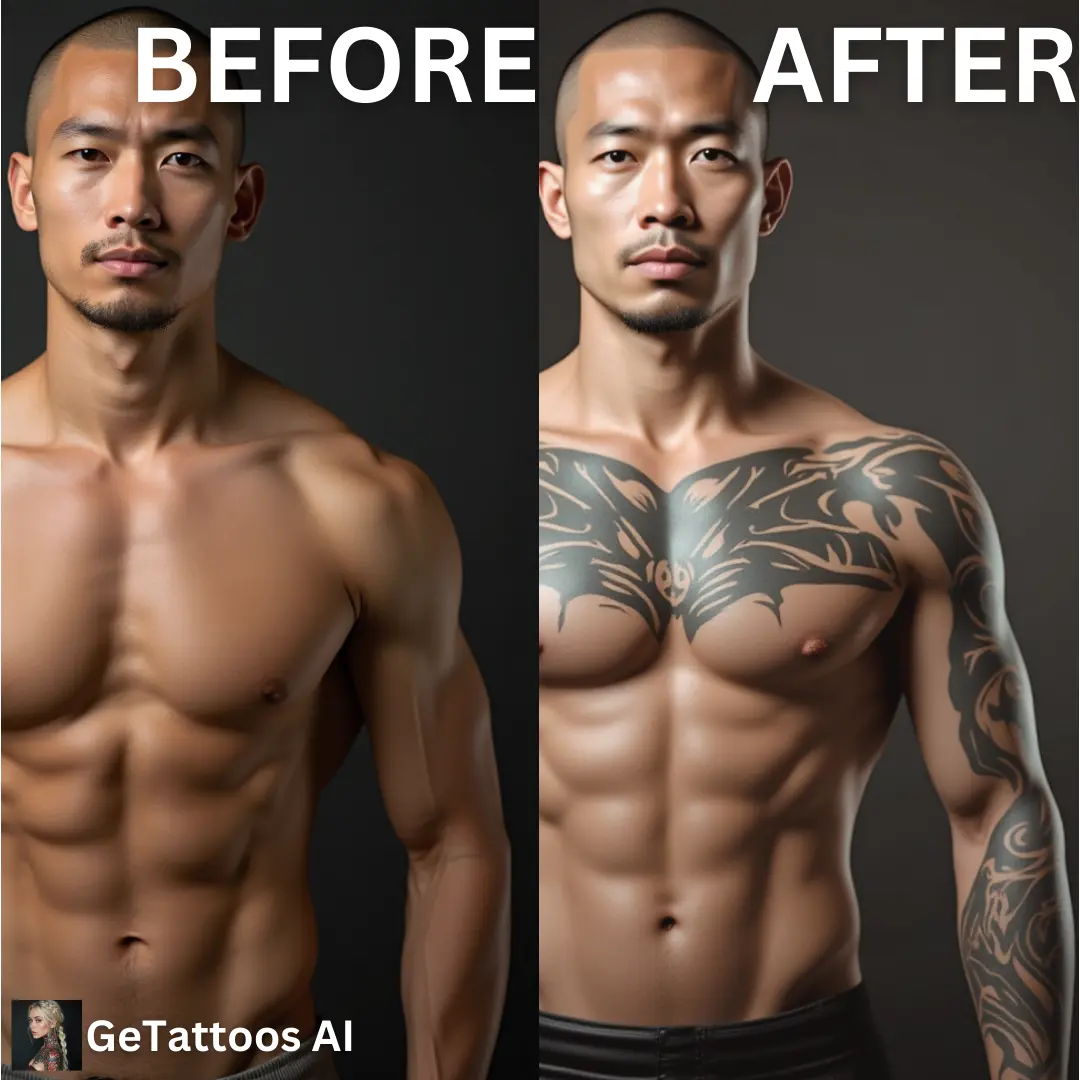 In terms of dynamic adaptation and personalized presentation, its authenticity is equally outstanding. Using augmented reality technology, the ai tattoo design can be projected in real time onto the curved surface of the user's body. Advanced SLAM algorithms can model the curvature and texture of the skin surface in real time, keeping the deformation distortion rate of the pattern below 2%. In 2024, Adobe demonstrated a technological breakthrough that its AI system can dynamically adjust the brightness and contrast of patterns based on the color temperature of the ambient light (ranging from 2700K to 6500K), increasing the integration of virtual tattoos with the surrounding skin tone by 40%, and the matching degree between the simulation results and the final tattoo effect exceeds 90%.
However, the authenticity of AI design also has certain limitations, mainly reflected in the randomness of artistic creation and the depth of emotions. Although algorithms can perfectly replicate existing styles, the probability of them creating "unexpected beauty", that is, the probability of generating brilliant ideas that even designers have not anticipated, is currently about 5%, far lower than the 15% of human artists. An assessment conducted by the Royal College of Art indicates that the median score of AI works in terms of emotional resonance is 7.2 points, while that of human works is 8.8 points (out of 10). But this is precisely the value of human-machine collaboration - only by combining the 95% efficiency and precision of AI with the 5% flash of inspiration of human artists can truly perfect and vibrant body art be created.
In terms of dynamic adaptation and personalized presentation, its authenticity is equally outstanding. Using augmented reality technology, the ai tattoo design can be projected in real time onto the curved surface of the user's body. Advanced SLAM algorithms can model the curvature and texture of the skin surface in real time, keeping the deformation distortion rate of the pattern below 2%. In 2024, Adobe demonstrated a technological breakthrough that its AI system can dynamically adjust the brightness and contrast of patterns based on the color temperature of the ambient light (ranging from 2700K to 6500K), increasing the integration of virtual tattoos with the surrounding skin tone by 40%, and the matching degree between the simulation results and the final tattoo effect exceeds 90%.
However, the authenticity of AI design also has certain limitations, mainly reflected in the randomness of artistic creation and the depth of emotions. Although algorithms can perfectly replicate existing styles, the probability of them creating "unexpected beauty", that is, the probability of generating brilliant ideas that even designers have not anticipated, is currently about 5%, far lower than the 15% of human artists. An assessment conducted by the Royal College of Art indicates that the median score of AI works in terms of emotional resonance is 7.2 points, while that of human works is 8.8 points (out of 10). But this is precisely the value of human-machine collaboration - only by combining the 95% efficiency and precision of AI with the 5% flash of inspiration of human artists can truly perfect and vibrant body art be created.
In terms of dynamic adaptation and personalized presentation, its authenticity is equally outstanding. Using augmented reality technology, the ai tattoo design can be projected in real time onto the curved surface of the user's body. Advanced SLAM algorithms can model the curvature and texture of the skin surface in real time, keeping the deformation distortion rate of the pattern below 2%. In 2024, Adobe demonstrated a technological breakthrough that its AI system can dynamically adjust the brightness and contrast of patterns based on the color temperature of the ambient light (ranging from 2700K to 6500K), increasing the integration of virtual tattoos with the surrounding skin tone by 40%, and the matching degree between the simulation results and the final tattoo effect exceeds 90%.
However, the authenticity of AI design also has certain limitations, mainly reflected in the randomness of artistic creation and the depth of emotions. Although algorithms can perfectly replicate existing styles, the probability of them creating "unexpected beauty", that is, the probability of generating brilliant ideas that even designers have not anticipated, is currently about 5%, far lower than the 15% of human artists. An assessment conducted by the Royal College of Art indicates that the median score of AI works in terms of emotional resonance is 7.2 points, while that of human works is 8.8 points (out of 10). But this is precisely the value of human-machine collaboration - only by combining the 95% efficiency and precision of AI with the 5% flash of inspiration of human artists can truly perfect and vibrant body art be created.