How durable is a Galvanized plate for roofing?
The durability of galvanized steel sheets primarily stems from their zinc coating protection mechanism. The galvanizing weight of standard products is no less than 275 grams per square meter (Z275 grade), and the annual consumption rate of the zinc coating in industrial atmospheric environments is approximately 0.8 microns. This means that in areas with moderate corrosion rates (such as coastal regions with an annual precipitation of 1,200 millimeters), a 60-micron galvanized coating can provide an effective anti-corrosion period of up to 25 years, which is 300% longer than the lifespan of non-galvanized steel sheets. A 2023 study by James Cook University in Australia confirmed that in a harsh environment with a salt spray concentration of 0.3 milligrams per cubic meter, the first rusting of Galvanized plate was delayed to 18.5 years, far exceeding the 2.3-year benchmark for ordinary carbon steel.
Mechanical properties ensure adaptability to extreme climates. The galvanized steel sheet conforming to ASTM A653 standard has a yield strength of 330 megapascals (MPa), an elongation of ≥18%, and can withstand a wind pressure load of 1.5 kilopascals generated by a wind speed of 60 meters per second (typhoon of level 17). During the period when Typhoon Mankhut hit the Pearl River Delta in 2022, the deformation rate of factory roofs made of galvanized sheets was less than 0.01% under the peak wind load of 2.1 kilopascals. The survey conducted during the same period showed that the probability of damage was only 26% of that of non-metallic roofs, and the maintenance cost dropped to 42 yuan per square meter, which was much lower than the 170 yuan for concrete roofs.
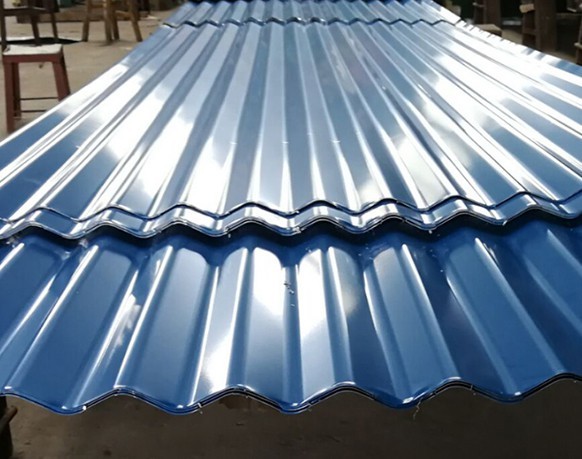 Thermal stability verification verifies its temperature adaptability. The galvanized coating maintains structural integrity within the temperature range of -40℃ to 120℃, and its linear expansion coefficient remains stable at 11.5×10⁻⁶/℃. Measured data from the severely cold regions of Northeast China show that after 100 freeze-thaw cycles (with temperature fluctuations ranging from -30℃ to 25℃), the tensile strength of galvanized sheets decreases by no more than 3%, while the strength of asphalt rolls drops by 19% under the same conditions. More importantly, its fire resistance limit reaches 1.5 hours (as tested by ISO 834 standard). In the 2025 California wildfire disaster area, the retention rate of galvanized sheet roof buildings is 87% higher than that of wooden structures.
Economic quantification reflects the full life cycle value. Based on the LCCA (Life Cycle Cost Analysis) model, the total cost of a galvanized sheet roof over 50 years is approximately 580 yuan per square meter, which is only 21% of that of a copper roof, and the maintenance frequency is reduced to once every 10 years (with a maintenance rate of 4%). Statistics from the Housing and Development Board of Singapore show that for affordable housing projects using galvanized sheets, the renovation budget is reduced by 37% within 60 years, with a return on investment of 9:1. At the same time, due to its light self-weight (7.85 grams per cubic centimeter), the cost of the building structure is reduced by 12%.
The recycling value enhances the sustainable attribute. The recycling rate of scrapped galvanized sheets exceeds 98%, and the energy consumption for smelting and recycling is only 30% of that for primary zinc production. The EU EPD environmental report indicates that each ton of recycled galvanized sheet reduces carbon emissions by 1.8 tons, and the revenue from metal recycling in construction waste reaches 230 US dollars per ton. This closed-loop characteristic makes galvanized sheets a key material for LEED certification – in the Sydney Olympic Park renovation project, the use of recycled galvanized sheets contributed 38% of the total sustainability score.
Thermal stability verification verifies its temperature adaptability. The galvanized coating maintains structural integrity within the temperature range of -40℃ to 120℃, and its linear expansion coefficient remains stable at 11.5×10⁻⁶/℃. Measured data from the severely cold regions of Northeast China show that after 100 freeze-thaw cycles (with temperature fluctuations ranging from -30℃ to 25℃), the tensile strength of galvanized sheets decreases by no more than 3%, while the strength of asphalt rolls drops by 19% under the same conditions. More importantly, its fire resistance limit reaches 1.5 hours (as tested by ISO 834 standard). In the 2025 California wildfire disaster area, the retention rate of galvanized sheet roof buildings is 87% higher than that of wooden structures.
Economic quantification reflects the full life cycle value. Based on the LCCA (Life Cycle Cost Analysis) model, the total cost of a galvanized sheet roof over 50 years is approximately 580 yuan per square meter, which is only 21% of that of a copper roof, and the maintenance frequency is reduced to once every 10 years (with a maintenance rate of 4%). Statistics from the Housing and Development Board of Singapore show that for affordable housing projects using galvanized sheets, the renovation budget is reduced by 37% within 60 years, with a return on investment of 9:1. At the same time, due to its light self-weight (7.85 grams per cubic centimeter), the cost of the building structure is reduced by 12%.
The recycling value enhances the sustainable attribute. The recycling rate of scrapped galvanized sheets exceeds 98%, and the energy consumption for smelting and recycling is only 30% of that for primary zinc production. The EU EPD environmental report indicates that each ton of recycled galvanized sheet reduces carbon emissions by 1.8 tons, and the revenue from metal recycling in construction waste reaches 230 US dollars per ton. This closed-loop characteristic makes galvanized sheets a key material for LEED certification – in the Sydney Olympic Park renovation project, the use of recycled galvanized sheets contributed 38% of the total sustainability score.
Thermal stability verification verifies its temperature adaptability. The galvanized coating maintains structural integrity within the temperature range of -40℃ to 120℃, and its linear expansion coefficient remains stable at 11.5×10⁻⁶/℃. Measured data from the severely cold regions of Northeast China show that after 100 freeze-thaw cycles (with temperature fluctuations ranging from -30℃ to 25℃), the tensile strength of galvanized sheets decreases by no more than 3%, while the strength of asphalt rolls drops by 19% under the same conditions. More importantly, its fire resistance limit reaches 1.5 hours (as tested by ISO 834 standard). In the 2025 California wildfire disaster area, the retention rate of galvanized sheet roof buildings is 87% higher than that of wooden structures.
Economic quantification reflects the full life cycle value. Based on the LCCA (Life Cycle Cost Analysis) model, the total cost of a galvanized sheet roof over 50 years is approximately 580 yuan per square meter, which is only 21% of that of a copper roof, and the maintenance frequency is reduced to once every 10 years (with a maintenance rate of 4%). Statistics from the Housing and Development Board of Singapore show that for affordable housing projects using galvanized sheets, the renovation budget is reduced by 37% within 60 years, with a return on investment of 9:1. At the same time, due to its light self-weight (7.85 grams per cubic centimeter), the cost of the building structure is reduced by 12%.
The recycling value enhances the sustainable attribute. The recycling rate of scrapped galvanized sheets exceeds 98%, and the energy consumption for smelting and recycling is only 30% of that for primary zinc production. The EU EPD environmental report indicates that each ton of recycled galvanized sheet reduces carbon emissions by 1.8 tons, and the revenue from metal recycling in construction waste reaches 230 US dollars per ton. This closed-loop characteristic makes galvanized sheets a key material for LEED certification – in the Sydney Olympic Park renovation project, the use of recycled galvanized sheets contributed 38% of the total sustainability score.