How do Galvanized plates compare to aluminum-magnesium-manganese alloys?
In terms of physical and mechanical properties, Galvanized plates typically exhibit significant strength advantages, with tensile strength ranging from 270MPa to 500MPa, depending on the substrate grade and coating thickness. Take the S350GD+Z grade as an example. Its yield strength is as high as 350MPa and it is suitable for heavy industrial structures. In comparison, the typical yield strength of 3004-H36 aluminum-magnesium-manganese alloy is 250MPa. Although its strength is relatively low, its density is only 2.73g/cm³, which is much lower than the 7.85g/cm³ of galvanized sheet. This means that in a large-scale roofing project with a span of 18 meters, the use of 0.9mm thick aluminum-magnesium-manganese sheets (with a unit area mass of approximately 2.46kg/m²) reduces the weight by 74% compared to 1.2mm galvanized sheets (with a unit mass of 9.42kg/m²), significantly lowering the load on the main structure and the amount of steel used.
Corrosion durability data reveal the core differences. According to the ASTM B117 salt spray test, a Galvanized plate with a conventional zinc coating thickness of 70μm has a theoretical lifespan of approximately 15 to 25 years in a moderate industrial atmosphere. The corrosion rate of aluminum-magnesium-manganese alloy is only 0.001mm per year, thanks to the passivation property of aluminum and the crack resistance of magnesium (0.8%-1.3% content). In actual cases, the outer envelope structure of the "Water Cube" for the Beijing Olympics, which was completed in 2008, used aluminum-magnesium-manganese plates. After 15 years of atmospheric exposure, the 2023 test report showed that the surface corrosion depth did not exceed 5μm, and it is expected to have a service life of more than 40 years. In contrast, for some of the temporary galvanized sheet venues of the 2010 Shanghai World Expo, local zinc coating peeling occurred in the eighth year under the humid Marine climate, and the maintenance cost reached 30% of the original cost.
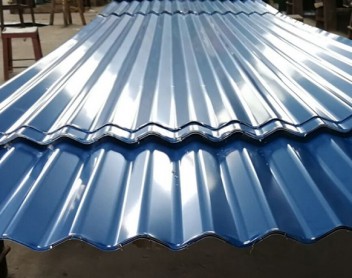 The economic comparison shows a turning point. Domestic market data for 2023 indicates that the price of Galvanized plate with a thickness of 0.7mm is approximately 5,100 yuan per ton. The price of aluminum-magnesium-manganese plates of the same thickness is as high as 27,000 yuan per ton, with an initial cost difference of 430%. However, the life cycle cost (LCC) analysis reveals a reversal: in coastal airport projects with severe salt spray environments, galvanized sheet roofs need to be partially replaced every 12 years (with a single cost of approximately 200 yuan per square meter), while the maintenance interval for aluminum-magnesium-manganese roofs can reach 30 years, and the cleaning cost is also reduced by 40%. The actual operation data of Guangzhou Baiyun Terminal 2 shows that the 600,000-square-meter roof made of aluminum-magnesium-manganese alloy has saved over 280 million yuan in maintenance costs over a 20-year period.
Typical application scenario data confirm the performance boundaries. In a strong acid environment with PH≤3 (such as a chemical workshop), the corrosion rate of aluminum-magnesium-manganese alloys soaps to 0.1mm per year, while specially treated heavy-duty Galvanized plates (with a zinc coating of 275g/m²) can still be safely used for five years. However, in terms of curved surface modeling, the elongation rate of aluminum-magnesium-manganese alloy reaches 30%, and it can be cold-bent into an arc surface with a radius of 40cm. It has been successfully applied to the "divine bird" shaped roof of Chengdu Tianfu International Airport (with a maximum curvature point radius of 0.55 meters). However, the bending radius of galvanized sheets needs to be more than 15 times the thickness of the sheet. For 1.0mm sheets, the minimum bending radius is 15cm, making it difficult to achieve complex three-dimensional shapes. The project records of the Shenzhen International Convention and Exhibition Center show that the installation efficiency of the corrugated roof made of aluminum-magnesium-manganese alloy reached 1,200 square meters per day, which was 60% faster than the galvanized sheet assembly system and reduced the on-site welding points by 85%, significantly lowering labor and construction costs.
The economic comparison shows a turning point. Domestic market data for 2023 indicates that the price of Galvanized plate with a thickness of 0.7mm is approximately 5,100 yuan per ton. The price of aluminum-magnesium-manganese plates of the same thickness is as high as 27,000 yuan per ton, with an initial cost difference of 430%. However, the life cycle cost (LCC) analysis reveals a reversal: in coastal airport projects with severe salt spray environments, galvanized sheet roofs need to be partially replaced every 12 years (with a single cost of approximately 200 yuan per square meter), while the maintenance interval for aluminum-magnesium-manganese roofs can reach 30 years, and the cleaning cost is also reduced by 40%. The actual operation data of Guangzhou Baiyun Terminal 2 shows that the 600,000-square-meter roof made of aluminum-magnesium-manganese alloy has saved over 280 million yuan in maintenance costs over a 20-year period.
Typical application scenario data confirm the performance boundaries. In a strong acid environment with PH≤3 (such as a chemical workshop), the corrosion rate of aluminum-magnesium-manganese alloys soaps to 0.1mm per year, while specially treated heavy-duty Galvanized plates (with a zinc coating of 275g/m²) can still be safely used for five years. However, in terms of curved surface modeling, the elongation rate of aluminum-magnesium-manganese alloy reaches 30%, and it can be cold-bent into an arc surface with a radius of 40cm. It has been successfully applied to the "divine bird" shaped roof of Chengdu Tianfu International Airport (with a maximum curvature point radius of 0.55 meters). However, the bending radius of galvanized sheets needs to be more than 15 times the thickness of the sheet. For 1.0mm sheets, the minimum bending radius is 15cm, making it difficult to achieve complex three-dimensional shapes. The project records of the Shenzhen International Convention and Exhibition Center show that the installation efficiency of the corrugated roof made of aluminum-magnesium-manganese alloy reached 1,200 square meters per day, which was 60% faster than the galvanized sheet assembly system and reduced the on-site welding points by 85%, significantly lowering labor and construction costs.
The economic comparison shows a turning point. Domestic market data for 2023 indicates that the price of Galvanized plate with a thickness of 0.7mm is approximately 5,100 yuan per ton. The price of aluminum-magnesium-manganese plates of the same thickness is as high as 27,000 yuan per ton, with an initial cost difference of 430%. However, the life cycle cost (LCC) analysis reveals a reversal: in coastal airport projects with severe salt spray environments, galvanized sheet roofs need to be partially replaced every 12 years (with a single cost of approximately 200 yuan per square meter), while the maintenance interval for aluminum-magnesium-manganese roofs can reach 30 years, and the cleaning cost is also reduced by 40%. The actual operation data of Guangzhou Baiyun Terminal 2 shows that the 600,000-square-meter roof made of aluminum-magnesium-manganese alloy has saved over 280 million yuan in maintenance costs over a 20-year period.
Typical application scenario data confirm the performance boundaries. In a strong acid environment with PH≤3 (such as a chemical workshop), the corrosion rate of aluminum-magnesium-manganese alloys soaps to 0.1mm per year, while specially treated heavy-duty Galvanized plates (with a zinc coating of 275g/m²) can still be safely used for five years. However, in terms of curved surface modeling, the elongation rate of aluminum-magnesium-manganese alloy reaches 30%, and it can be cold-bent into an arc surface with a radius of 40cm. It has been successfully applied to the "divine bird" shaped roof of Chengdu Tianfu International Airport (with a maximum curvature point radius of 0.55 meters). However, the bending radius of galvanized sheets needs to be more than 15 times the thickness of the sheet. For 1.0mm sheets, the minimum bending radius is 15cm, making it difficult to achieve complex three-dimensional shapes. The project records of the Shenzhen International Convention and Exhibition Center show that the installation efficiency of the corrugated roof made of aluminum-magnesium-manganese alloy reached 1,200 square meters per day, which was 60% faster than the galvanized sheet assembly system and reduced the on-site welding points by 85%, significantly lowering labor and construction costs.